
Where CVRJ Releases Go
Central Virginia Regional Jail is the adult jail that serves Louisa County, although the facility sits in the Town of Orange. A person held on a Louisa matter may leave after posting bond, being released on recognizance, completing a local sentence, or receiving a court order. Those outcomes can end jail custody and return the person to the community. Conditions can remain in force. Bond terms, pretrial supervision, probation, or another court date may follow even though the person is no longer inside the jail.
Departure does not always mean freedom. CVRJ houses local, state, and federal prisoners. Its release entry may instead show transfer to the Virginia Department of Corrections, another jail, federal authorities, or immigration custody. A transfer ends the CVRJ booking but continues confinement. The record's release type and destination are therefore more useful than a simple yes-or-no status. When another agency assumed custody, use that agency's system after the handoff has had time to post.
| CVRJ outcome | What it means | Next source |
|---|---|---|
| Bond or recognizance | Local jail custody ended, with court conditions possible | CVRJ and Louisa court order |
| Sentence complete | The local term ended unless another hold applied | CVRJ release entry and sentencing order |
| Transfer to VADOC | The person remained incarcerated | VADOC Inmate and Supervisee Locator |
| Federal or ICE pickup | Custody changed agencies | BOP, ICE, federal court, or responsible agency |
Confirm a CVRJ Release
CVRJ has no official public roster, recent-release archive, or booking-photo gallery on its website. That means an online no-result cannot stand as proof of release. The sound path starts with the regional jail because it controls the physical booking event. Virginia Jail VINE and the Louisa court file can then support the answer. If the jail reports a transfer, the receiving system becomes essential.
- Call CVRJ at (540) 672-3222 with the full name and an approximate booking or release date. Ask whether the booking ended in community release or transfer.
- Search Virginia VINE through VINELink. Read any release or transfer event literally and match the facility and identifiers.
- Open the Virginia Online Case Information System. Search the correct Louisa court for the order or disposition behind the custody change.
- If CVRJ names a new custodian, check the VADOC, BOP, ICE, receiving-jail, or federal-court channel that fits that destination.
- Request the existing CVRJ booking and release entry when an exact time, release type, or destination is needed.
Leaving the CVRJ roster is not proof of community release. A transfer, data limit, or another hold may explain the absence.
The full Louisa County released-inmate search and release-record method is set out on the home page. Record the date and time of each check. Status tools can update on different schedules, and a court order may precede the jail's final clearance.
CVRJ Release Records Contact
Send a narrow request to the regional jail's custodian for the jail event. The Louisa County Sheriff's Records Department can supply Sheriff-created arrest reports, warrants, and related papers, but it does not own CVRJ's final release database. A court clerk supplies the court order. Keeping those roles separate avoids sending one broad request to an office that does not hold the needed record.
13021 James Madison Highway
Orange, VA 22960
(540) 672-3222
No separate records email or public release-desk hours are posted.
Ask for the existing booking or jail-management entry for one person and one booking episode. Include the full name, date of birth if known, and an approximate booking date. Request the admission date and time, release date and time, booking number, release disposition, and receiving agency or destination. If a photo is needed, specify the adult initial-intake photograph. Ask for electronic copies, an advance cost estimate, and release of nonexempt portions with protected material redacted.
The official CVRJ records-request page shows the custodian and mailing path. The captured page below confirms that route.
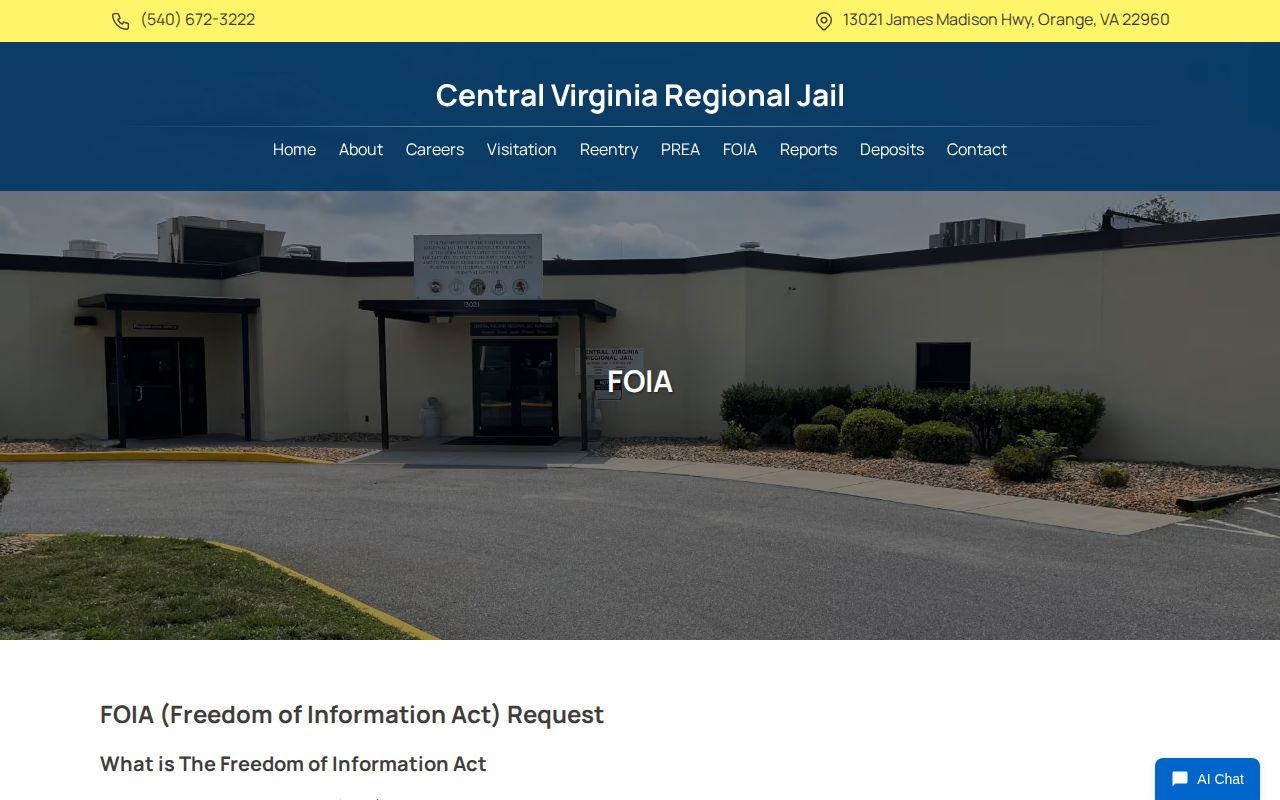
The screenshot supports the written-request channel, but it does not create an online form, records email, fee schedule, or retention promise.
CVRJ Release Request Timing
Virginia's public-records framework governs this regional public body. Under Virginia FOIA, a public body generally responds within five working days by producing records, citing a specific exemption, producing part and withholding part, reporting no record or referring the requester, or invoking added time in writing. The usual extension is seven more working days. A response deadline is not a guarantee that every requested record arrives within five days.
Reasonable actual search, access, duplication, and supply costs may be charged. No CVRJ booking-release fee schedule is published. Ask for an estimate before work begins. If estimated charges exceed $200, the body may require a deposit and pause the response clock until payment. The research identifies no public CVRJ retention term, so the request should ask which current Library of Virginia record series applies rather than assume the record disappears on an online schedule.
Note: A focused request for one booking episode is easier to identify and price than a request for every record about a person.
CVRJ Holds Mixed Custody
Central Virginia Regional Jail is operated by the Central Virginia Regional Jail Authority. It serves Fluvanna, Greene, Louisa, Madison, and Orange Counties. Participating sheriffs have a role in the regional authority structure under Virginia law, but Louisa's Sheriff does not operate the CVRJ booking database. This distinction explains why a Louisa arrest can lead to an Orange mailing address for the confinement and release record.
The population includes pretrial detainees, people serving local sentences, state-responsible prisoners, and some federal prisoners. Work release or electronic incarceration may permit approved time outside the secure building without ending legal custody. Seeing someone outside is not proof of discharge. The actual record must show that custody ended, or that another agency received the person.
Those figures come from Virginia's FY2024 jail-cost report and describe facility workload, not Louisa County releases. The jail's own About page says it houses about 400 local, state, and federal prisoners.
How CVRJ Became Regional
CVRJ opened on September 1, 1990 with 96 designed beds and 50 staff. A 50-bed dormitory followed in 1995, then 101 beds and support space were added in 1999. The jail's history and authority overview describes that growth and the five-county service area. This is the distinctive local reason a Louisa County release record comes from a jail outside Louisa.
The same regional structure shapes the search. A county website may point to an inmate-search feature, while the authority remains the custodian of the jail episode. The Sheriff record covers the arresting agency's work. CVRJ covers admission, custody changes, and departure. The court covers the order. VINE reports events sent by the participating jail. Each source should be used for the fact it controls.
The CVRJ home page visibly identifies Louisa within its service area and provides its Virginia VINE access panel.
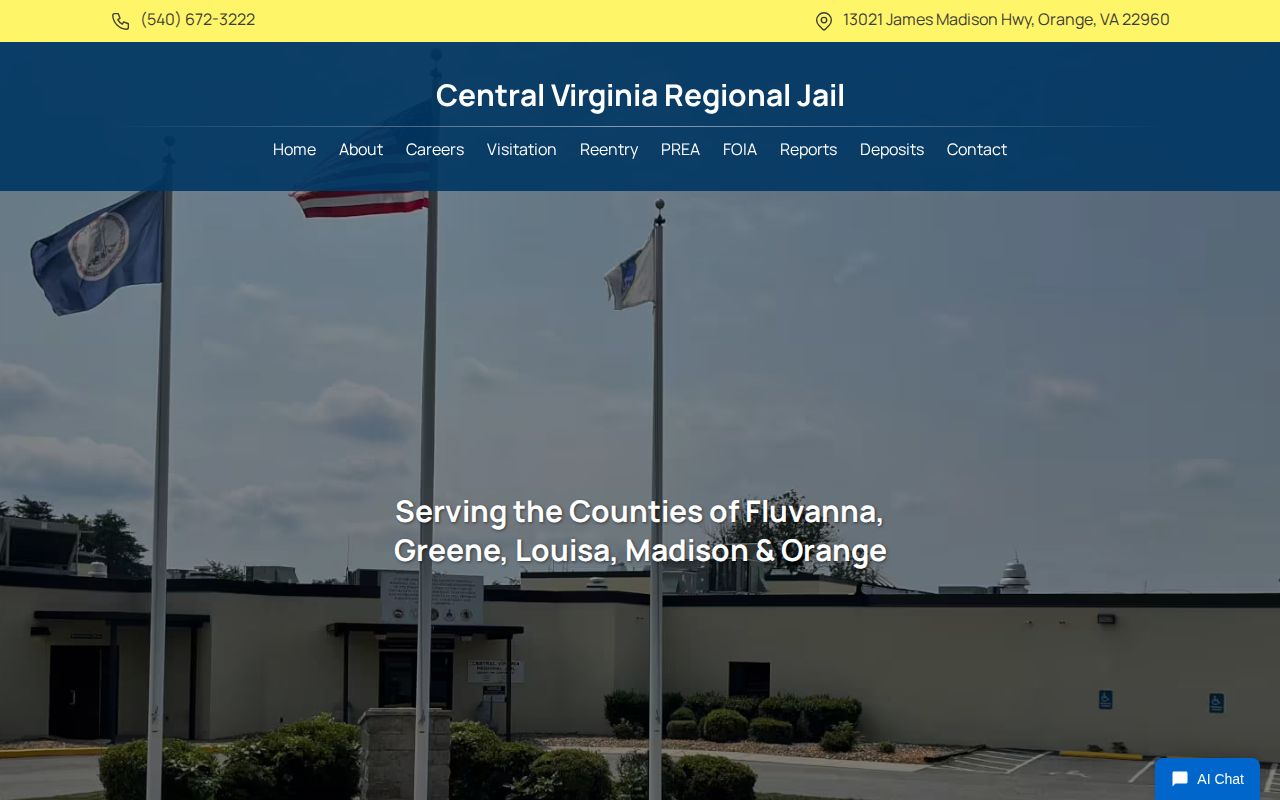
This official view ties Louisa to CVRJ and shows why VINE is a supporting status channel, not the owner of the release record.
Plan for a CVRJ Release
No official CVRJ source states a routine release hour, weekend procedure, property-return method, family waiting point, physical exit, or transportation service. Do not borrow VADOC's state-prison rule that release occurs by late on the release date. That rule does not set a local CVRJ schedule. Likewise, visitation directions do not establish where a person exits after processing.
Call before traveling. Ask whether all holds have cleared, whether the release is still expected, where an authorized pickup may wait, and what staff can confirm. If the person is being transferred, ask for the receiving agency recorded on the disposition. Weather, court paperwork, identity checks, detainer review, and other final clearance can affect the physical departure even after a legal release basis appears in court.
Adult CVRJ Release Boundary
CVRJ is the adult regional jail route. Louisa youth who are placed in secure detention are served through the Rappahannock Juvenile Detention Center and confidential juvenile channels. Adult rosters, mugshot searches, and the public adult case workflow must not be used to infer a youth's custody or release status. Parents, guardians, counsel, the Court Service Unit, the juvenile court, and the center use access rules that protect those records.
That boundary also helps prevent a false negative. Absence from CVRJ, VADOC, BOP, or adult court tools says nothing reliable about a youth. The facility list preserves the juvenile center as a valid Louisa service connection while keeping its status process separate from adult released-inmate searches.