
Louisa County Parole and Probation
Virginia separates the decision to release a person on parole from the work of supervising that person. The Virginia Parole Board makes discretionary parole decisions for people who remain eligible. The Virginia Department of Corrections Community Corrections system supervises parolees, probationers, and other people placed under community supervision. A locator result naming a probation and parole district is therefore a community status, not the name of another jail.
Probation most often rests on a court order. It may follow a suspended sentence, replace some active jail time, or begin after a local sentence ends. Parole rests on a lawful release from a state sentence before final discharge. Both can carry reporting duties and conditions, yet their sources differ. The Louisa sentencing order is central to probation. The Board record, VADOC release record, and supervising district are central to parole. An ordinary bond release from Central Virginia Regional Jail is neither one unless an order separately places the person under supervision.
| Point | Parole | Probation |
|---|---|---|
| Who authorizes it | Virginia Parole Board for eligible state cases | Sentencing court |
| Who supervises locally | VADOC Community Corrections | VADOC or a local court-referred program, depending on the order |
| Best first record | VADOC locator and Board report | Louisa court order and locator when VADOC supervises |
| End point | Discharge from parole | Court or agency completion and discharge |
Note: Leaving CVRJ proves only that a local custody episode ended or moved; it does not identify parole, probation, or final discharge.
Verify Louisa County Post-Release Supervision
Begin with the official VADOC Inmate and Supervisee Locator. It accepts a seven-digit VADOC number or a name. A name search requires the full last name and at least the first three letters of the first name. Location, race, gender, and age range may help narrow a common name. Compare all available identifiers before treating a record as the right person.
- Search by VADOC number when known. Otherwise use the required name fields and only the filters supported by the live form.
- Read the location and status literally. A prison location means confinement continues. A probation and parole district points to community supervision.
- Open the Louisa court case through the Virginia Online Case Information System. Compare the sentence, suspended term, and probation order.
- For a parole claim, search the Virginia Parole Board monthly reports by DOC number and name.
- Call the district listed on the current record to confirm the proper office or records route. Staff may protect details in the supervision file.
VADOC says locator data is updated daily, but it may be inaccurate or out of date. A person who no longer appears may have completed supervision, may fall outside the public interface, or may require a historical records request. Absence is not a discharge certificate. For a durable state record, direct a narrow request to VADOC. A former person seeking their own inactive file can use notarized Form 050_F17 through Central Criminal Records.
Louisa County Supervision at District 9
Louisa County has no separate VADOC supervision office. Charlottesville Probation and Parole, District 9, serves Louisa along with Albemarle, Fluvanna, Goochland, and Charlottesville. This is the practical office to contact when a VADOC result ties a Louisa County person to community supervision. CVRJ cannot verify the current terms of a state community-corrections case merely because the person was once housed there.
750 Harris Street, Suite 202
Charlottesville, VA 22903
(434) 295-7194
Have the full name and VADOC number ready, if known. Ask whether District 9 is the correct office and how to request a public or personal record. Do not expect staff to disclose protected case notes, a home address, treatment details, or every supervision condition. The office controls supervision administration. The court controls its probation order, and the Parole Board controls its own decisions.
Note: A District 9 locator entry indicates community supervision, while a CVRJ entry concerns jail custody and calls for a different records source.
Louisa County Parole Decision Records
Parole eligibility is limited in Virginia. Code § 53.1-165.1 generally ended discretionary parole for covered felony offenses committed on or after January 1, 1995, subject to statutory exceptions. Code § 53.1-151 contains eligibility rules for older and otherwise eligible commitments. Offense date matters. Age, sentence length, or conviction date alone cannot establish eligibility.
The Board identifies groups that can remain eligible, including some pre-1995 offenses, qualifying juvenile-offense sentences, certain older jury sentences, older multiple-misdemeanor cases, and some Youthful Offender Act cases. Each route has limits. A typical fraction or cap from one provision must not be used as a universal calculator. The sentence record and the law that applies to that commitment control.
The official monthly parole report index shows how the Board publishes its results.
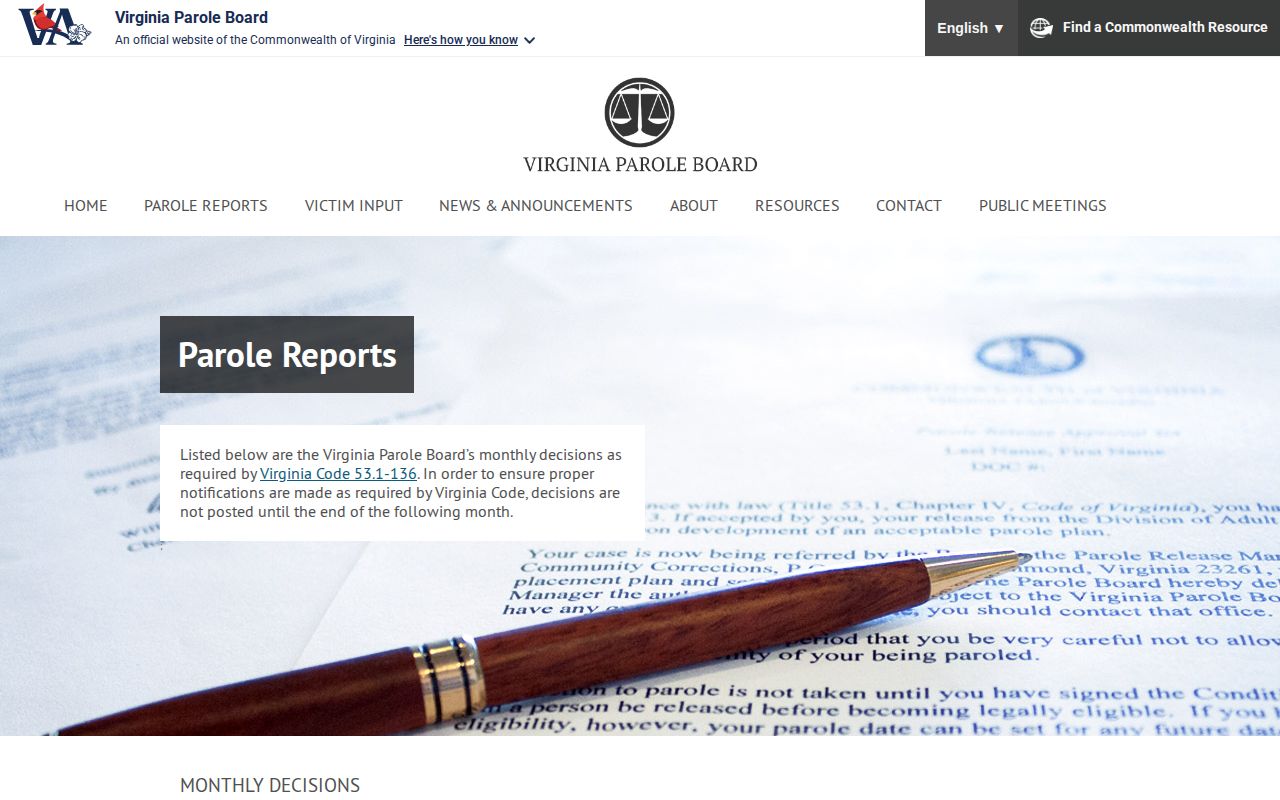
Search a relevant PDF by DOC number and name. A Grant is approval, not proof that physical release took place that day. Not Grant leaves the person subject to other lawful release rules, while Revoke concerns a violation and return to or continuation of custody.
Louisa County Parole Hearing Status
The Board's Public Meetings page lists public final-deliberation meetings for applicable grant matters. The current process has required public final grant deliberation in covered matters since July 2024. Still, not every eligible person has a public meeting. Dates are irregular rather than fixed weekly or monthly events.
Internal parole interviews follow a different track. VADOC-calculated eligibility dates help set quarters and internal dockets. Those schedules are not a public name-search calendar. Use the public meeting page for posted agendas and minutes, and use the monthly reports for decisions. Neither source replaces VADOC release processing. Detainer checks, release planning, conditions, and paperwork may stand between a Grant and departure from custody.
- Parole
- Conditional release from eligible state confinement before final sentence discharge.
- Probation
- Court-ordered community supervision, often tied to a suspended sentence.
- Discharge
- The formal end of the relevant custody or supervision authority.
- Detainer
- A notice that another authority may seek custody.
- Absconder
- A supervisee whose location is unknown after reasonable efforts to find them.
Louisa County Supervision Violations
Conditions come from the controlling order and agency. They can include reporting, travel limits, payment duties, treatment, or other case-specific terms. A claimed violation does not by itself show the outcome. An officer, court, or Board may investigate and use a warning, hearing, warrant, capias, revocation process, or another response allowed by law. The current order and docket provide more reliable context than a brief online label.
Absconding is not the same as discharge. VADOC defines an absconder as a community supervisee whose whereabouts remain unknown after reasonable attempts to locate them. An officer arrest warrant, court capias, or Board warrant may follow. VADOC's Most Wanted collection is selective, and some entries can remain with a Captured label. Louisa Sheriff's Most Wanted channel is also an active-fugitive tool, not a full list of parolees or warrants. Absence from either page proves little.
Note: Never attempt to apprehend a person shown on a wanted page; use the contact directions published by the responsible agency.
Louisa County Reentry After Release
The Louisa Reentry Council offers voluntary navigation after incarceration. Its stated areas include transportation, property and clothing, family reintegration, health-service connections, food aid, benefits, and other transition needs. This is support, not a public probation database and not a substitute for District 9 reporting. A person can use reentry help whether or not an online search reveals supervision.
The county identifies Jennifer Carroll as the current contact, while the CVRJ reentry page retains an older contact listing. The county page is therefore the safer source for current intake information. The CVRJ page shows the regional-jail connection to local reentry work.
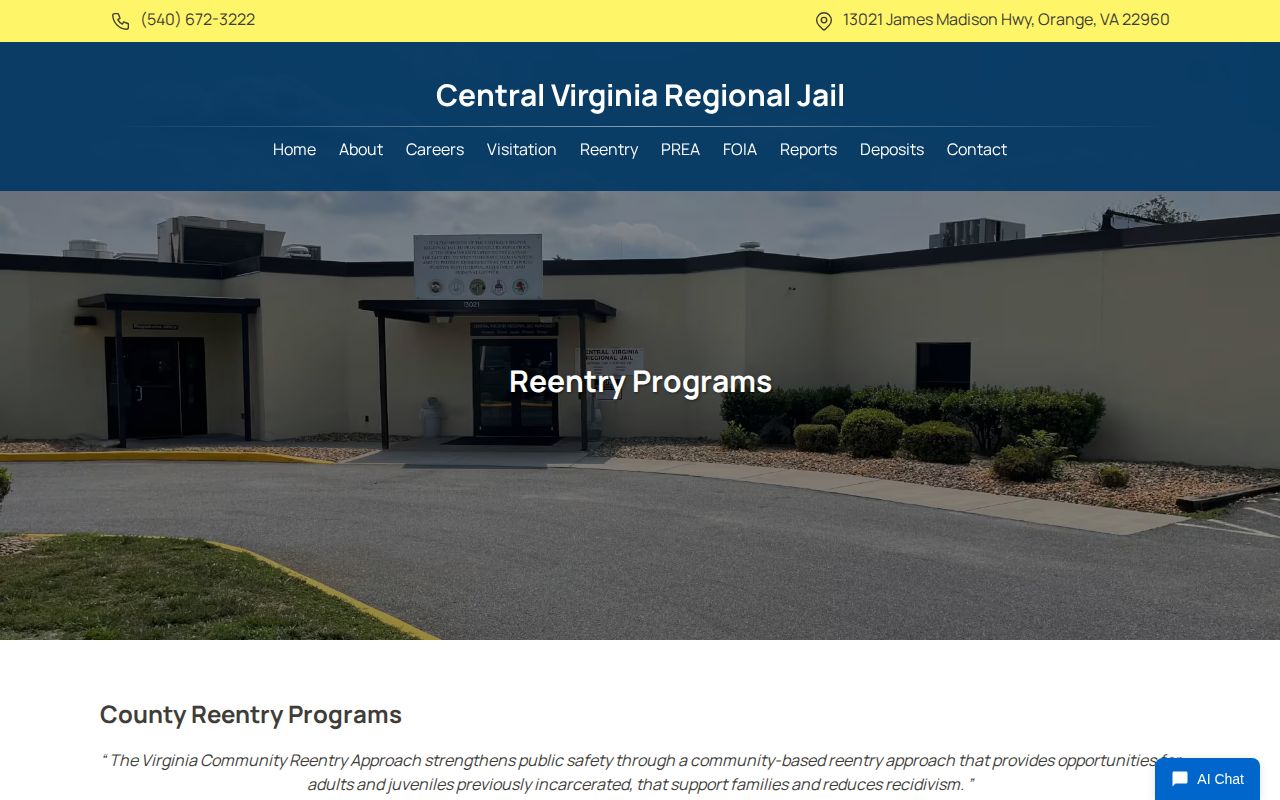
Reentry staff can help connect a person with services, but they do not change a court order or VADOC condition. Questions about required reporting still belong with District 9, OAR when the court made that referral, or the court named in the order.
Louisa County Supervision Discharge
Supervision ends through an official discharge, expiration, or court or agency action, not merely because a name disappears online. For probation, read the Louisa court order and later docket entries for the stated term and any modification. For parole or VADOC probation, ask VADOC for the record showing the end of supervision. A fully discharged person may no longer appear in the public locator, so a narrow records request can be the only durable route.
Keep custody and supervision events separate. A person released from CVRJ on bond may report to court-referred OAR services. A person discharged from a VADOC prison may report to District 9. Someone transferred from CVRJ to a state facility remains confined. The Louisa County released-inmate search and release-record path explains how to verify the underlying jail event before interpreting what came next.
For a former person's own inactive state record, Form 050_F17 requires notarization and personal identifiers, including the prior DOC number when known. It is mailed in original form to VADOC Central Criminal Records. That subject-access process is not an open route to another person's complete supervision file.